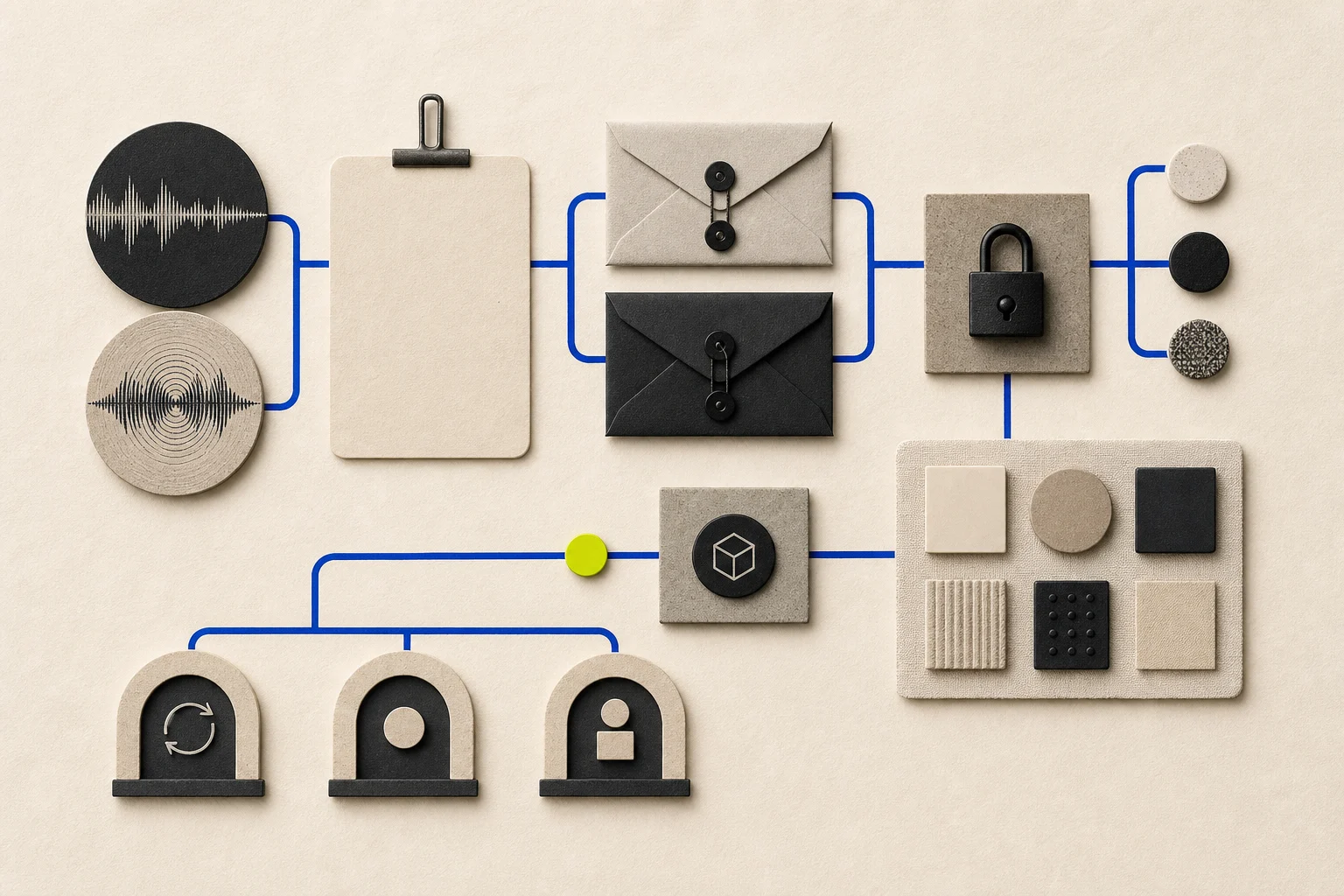
A music scene can make clothing legible as belonging, refusal, workwear, fantasy, regional pride, fandom, or stagecraft. It can also create products through tour merchandise, artist collaborations, record-store retail, independent labels, jewelry, and styling. Those pathways are real enough to study, but they are not one causal chain. A visible look may circulate widely without producing sustained purchases, and a successful merchandise item may not represent the scene that observers attach to it.
FashionMember reviewed current official museum, platform, copyright, advertising, product-data, retail, and image guidance. It has not interviewed artists or communities, obtained event or platform data, inspected merchandise, or reconciled retailer receipts, completed returns, kept sales, and reorders. This draft defines an accountable demand study rather than declaring which music scene is driving fashion.
A scene is not a playlist tag
The research must define a scene through participants, places, practices, time, and self-description. Genre metadata can help locate public material, but a platform category does not automatically identify a community. Regional scenes can contain several sounds and dress languages; one genre can contain many scenes with different histories.
The GRAMMY Museum’s Hip-Hop America exhibition treated music, dance, graffiti, fashion, business, activism, and regionalism as connected themes and used artifacts plus an advisory board. That institutional framing is useful because it does not reduce hip-hop fashion to a single garment or celebrity. It is not permission to extract a contemporary style code from every community the exhibition discusses.
FashionMember should begin with paid interviews and community review. Ask artists, stylists, venue workers, photographers, designers, independent retailers, and participants which terms they use, which references are internal, and what should not be photographed or commodified. Preserve disagreements instead of forcing consensus.
Separate cultural appearance from commercial stages
A responsible pathway distinguishes at least these stages: a style appears in an authorized performance, editorial, or community context; an artist or maker releases an exact product; a retailer or platform makes it available; customers encounter it; transactions complete; return windows close; and stores or makers reorder.
Spotify for Artists currently allows eligible artist merchandise connected through Shopify to appear on artist profiles, release pages, and the Now Playing view. This is first-party evidence that merchandise and listening can share a discovery surface. It does not reveal independent fashion demand, customer motivation, fulfilled orders, returns, or whether a broader scene adopted the item.
For each signal, record the source, date, region, ownership, paid or organic status, artist permission, product ID, variants, price, availability, and relationship to the scene definition. A platform impression, concert photograph, waiting list, order, delivered unit, kept sale, and reorder have different denominators.
Merchandise requires a product record
Artist merchandise should be reported like fashion product, not treated as a souvenir category with lighter standards. Preserve fiber or material, construction, responsible business identity, country of origin where disclosed, care, sizes, dimensions, current price, availability, fulfillment party, return terms, and image rights. Inspect the exact item before making quality claims.
Google Merchant Center’s current specification shows the importance of stable IDs, accurate variants, price and availability, and landing-page consistency. It does not certify an artist relationship or authorize music, names, images, logos, or likenesses.
The research should distinguish official artist merchandise, licensed collaborations, venue merchandise, community-made products, bootlegs, reporter-observed styling, and unrelated fashion that resembles a scene code. “Inspired by” is not a substitute for permission or provenance.
Rights attach to different elements
A single music-fashion story may involve a composition, sound recording, live performance, photograph, video, artist name, likeness, logo, artwork, garment graphic, venue, and quoted words. Those elements may have different owners. The U.S. Copyright Office explains that musical compositions and sound recordings are separate works and provides separate registration guidance for photographs.
Do not assume that event access grants merchandise, publication, or promotional rights. Obtain written scope for photographs, clips, artwork, interview quotes, and product images. California Civil Code section 3344 addresses commercial use of a person’s name, voice, signature, photograph, or likeness; product- and publication-specific legal review remains necessary.
FTC endorsement guidance also matters when an artist, creator, or publication has a material connection to a product. Label gifted access, affiliate links, paid partnerships, and commercial relationships clearly. Editorial independence and the evidence behind demand claims should remain visible.
Ethical fieldwork comes before style counting
Set the sampling frame before observation: eligible events or public sources, dates, geographic boundaries, inclusion rules, and a plan for missing or restricted contexts. Avoid minors unless a qualified protocol and guardian consent make participation necessary. Do not follow people, scrape private communities, or infer identity, ethnicity, gender, sexuality, income, or affiliation from clothing.
Two coders can classify observable product or construction features after the scene vocabulary is approved. Retain disagreement. Generated imagery must never stand in for a documentary scene. W3C image guidance supports context-specific alternative text, while rights and consent determine whether the image should be used at all.
Retail evidence tests demand without claiming ownership
An authorized retailer study should log exact styles and variants, order date, received units, time available, promotion, eligible sales, completed returns, kept units, and reorders. Interview buyers about the documented reason for selection. A buyer may reference an artist, a local customer, a silhouette, a material, or a broader market signal; do not rewrite that answer as scene causation.
The Census Bureau’s Monthly Retail Trade provides broad clothing and accessories context, not artist-, scene-, or merchandise-level demand. Use macro data only as context and never as the denominator for a narrow cultural claim.
Completed returns can reveal fit, print, material, care, fulfillment, or expectation problems. They cannot show whether a customer belongs to a scene. Customer research about motivation must be optional, consented, minimized, and reported in aggregates that protect participants.
A reproducible fictional scene audit
FashionMember created four invented evidence packets in content/data/FM-112-music-scene-demand-audit.csv. The script scripts/fm112-music-scene-demand-audit.php checks whether a fictional packet documents current scene sources, a scene definition, artist permissions, music and image rights, a locked event or platform sample, artist interviews, community context, merchandise identity, an authorized retailer sample, product materials, price and inventory, buyer interviews, received inventory, completed returns, sales quality, reorders, paid and organic disclosure, privacy and safety, claims review, a human editor, ownership, and complete signal arithmetic.
Two complete fictional packets reach scene-review; two remain on hold. Every artist, scene, event, product, retailer, buyer, customer, transaction, return, reorder, owner, and result is fictional. The audit cannot establish real cultural influence or demand.
Influence needs attribution and humility
Music scenes continue to shape fashion because participants make, wear, name, photograph, perform, sell, and reinterpret objects. The reporter’s job is not to claim that language from outside. It is to show who describes the connection, which rights and product records support it, and where visibility does or does not become kept demand.
Until interviews, permissions, the locked sample, exact merchandise, retailer records, mature returns, and human review are complete, FashionMember can publish the method and current public infrastructure. It cannot responsibly identify a scene as a verified demand engine.
Sources and verification
- GRAMMY Museum: Hip-Hop America—The Mixtape Exhibit — institutional treatment of music, fashion, business, regional scenes, artifacts, and advisory review.
- Spotify for Artists: Sell Merch on Spotify — current first-party artist-merchandise discovery and Shopify integration; not demand or fulfillment evidence.
- U.S. Copyright Office: Musical Compositions and Sound Recordings — authoritative distinction among music rights and related artwork or photographs.
- U.S. Copyright Office: Photographs — authoritative photo-rights and registration context for editorial, event, and commercial images.
- California Civil Code section 3344 — official statutory context for commercial use of name, voice, signature, photograph, or likeness.
- FTC: Disclosures 101 for Social Media Influencers — official material-connection and disclosure guidance.
- Google Merchant Center: Product Data Specification — official current product, variant, price, availability, and image metadata guidance.
- U.S. Census Bureau: Monthly Retail Trade — official broad retail context; not music-scene fashion evidence.
- W3C WAI: Images Tutorial — authoritative image-purpose and alternative-text guidance.
How this story was checked
- Sources
- 9 linked records · View list
- Last verified
- Reporting desk
- FashionMember Editorial Desk
- Format
- Analysis
- AI assistance
- Used with editorial review; disclosed above.