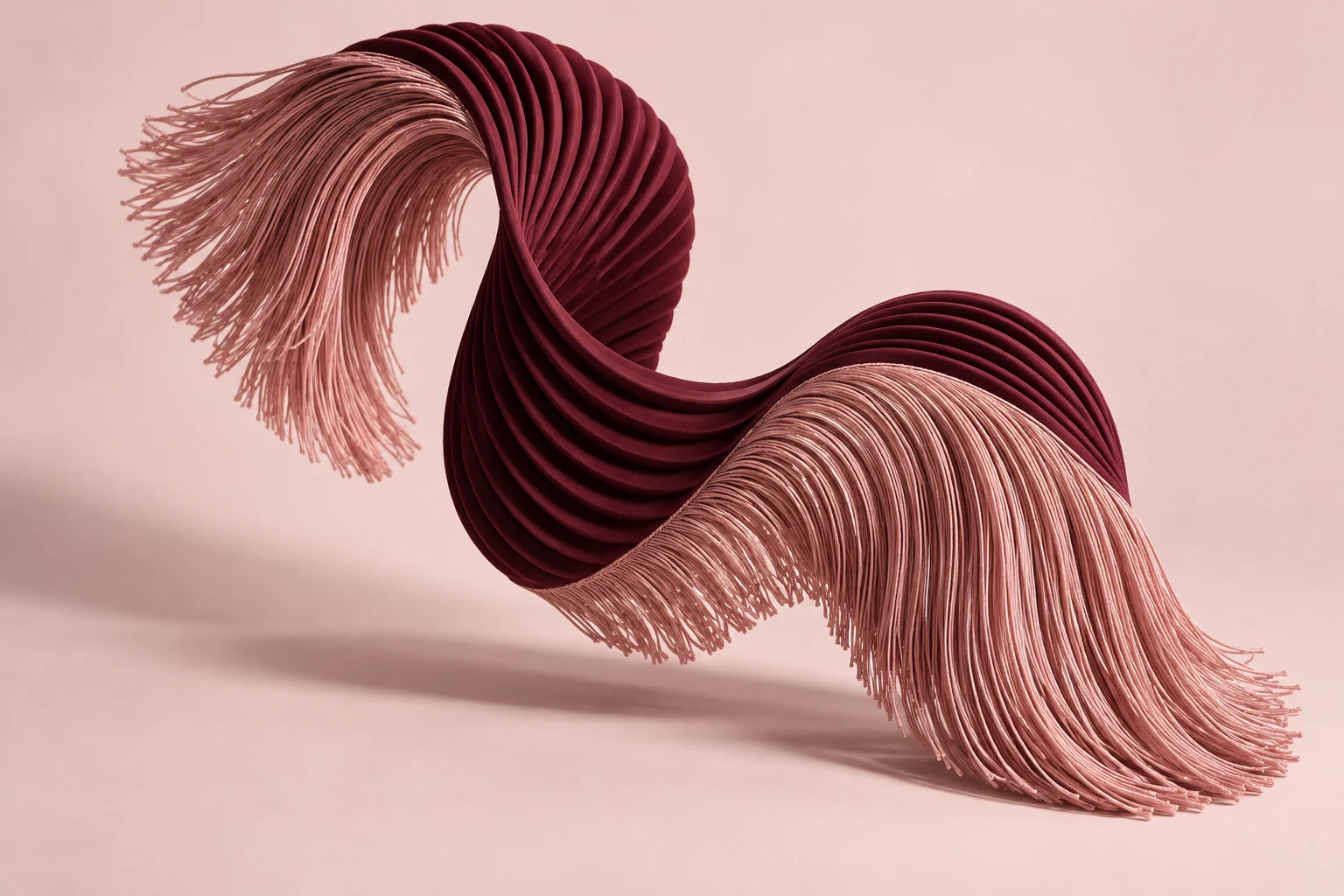
A sleeve can look extravagant before its wearer takes a step. Then it moves, and the impression changes: a surface that seemed dense becomes light, or a soft outline reveals a surprisingly deliberate construction. That second reading is where texture earns its place in a collection. It does something a color choice alone cannot.
New York Fashion Week’s September 2026 season gives that design question a particular context. The CFDA’s policy excluding animal fur from collections on the Official NYFW Schedule takes effect this season. In a September 8 update, Humane World for Animals identifies the Spring/Summer 2027 shows beginning September 10 as the first season under the commitment.
The news is an institutional change, not proof that every show has been inspected. Its creative implications are nevertheless worth considering now. FashionMember’s view is that the strongest response is not to make every alternative resemble the material it replaces. It is to give a garment a surface compelling enough that imitation stops being the main subject.
What the official policy actually covers
The CFDA announced the change on December 3, 2025. It applies to collections on its official schedule and to promotion through its Fashion Calendar, social channels and website. The stated restriction covers fur from animals farmed or trapped specifically for their pelts. An exception concerns fur obtained by Indigenous communities through traditional subsistence hunting.
That is a defined policy, not a declaration that every animal-derived material has disappeared from fashion. Nor should the official schedule be confused with every presentation happening in New York. The CFDA also committed to resources helping designers explore alternatives.
Humane World for Animals worked on the policy alongside Collective Fashion Justice. Its September update is useful confirmation of the season’s timing, but it is also an account from an advocacy partner. We have not independently audited participating collections or measured the policy’s effect on purchases.
The replacement does not have to look like the original
The CFDA’s March 31 materials discussion brought together representatives of those two organizations and designer Graham Tabor. Its published recap places fabric manipulation alongside newer materials in the conversation. That distinction matters: a different appearance can come from how fabric is worked, not only from finding another substance to buy.
In a May 22 CFDA essay, Collective Fashion Justice founder Emma Håkansson argues for designing around the capacities of a new material rather than demanding an exact replica. Her organization helped develop the policy, so this is an informed advocacy perspective, not a neutral comparative materials study.
For FashionMember, the useful design exercise begins with a much narrower question than “What replaces fur?” What should this particular part of the garment do visually? An oversized cuff might need to interrupt an otherwise straight silhouette. A shoulder treatment might need to catch light. A hem might need to register movement without adding a heavy-looking border. These are proposed design briefs, not descriptions of looks we observed this week.
Each brief can lead somewhere different. Repetition, spacing, contrast and the placement of a textured area offer decisions a designer can control. A dense treatment across the whole body and a small interruption at the neckline can share a construction idea while producing very different clothes. The point is to judge the garment, not award a prize for the closest resemblance.
There is also room for restraint. A collection does not need a spectacular surface on every look to make a material decision visible. One convincing treatment, used with a clear sense of proportion, may express more authorship than a rail of competing effects. That is an editorial judgment about coherence, not a forecast of what buyers will order.
Richness needs a point of contrast
Consider a hypothetical evening jacket with a sharply defined front and a moving textile treatment at its back. The interesting relationship is between the two readings: controlled from one angle, expressive from another. If the same texture covers every edge, the contrast may disappear.
This is a useful way to edit a collection before giving the material a marketing name. Look at the shape from a distance, then look at the surface close up. Does the texture clarify the silhouette, obscure it intentionally, or merely make it harder to read? Does it belong to the same visual language as the fastening, lining and rest of the outfit?
A flat reference image cannot settle all of those questions. FashionMember would ask for a simple moving view of the finished sample as part of the design review. The purpose is not to stage a campaign early. It is to see whether the intended relationship survives a turn, an arm movement and an ordinary seated position.
The quieter parts deserve attention as well. If a surface is the central idea, the transition into an untextured section should look resolved. An edge that appears incidental can weaken a deliberate silhouette. These are things to examine in a sample; this article is not asserting that a particular fiber or supplier will solve them.
Fur-free is not a complete material description
A policy boundary tells a reader what is excluded. It does not tell them everything about the alternative. A striking surface in a show image cannot establish its composition, durability, care needs or environmental performance.
The sources behind this article advocate material innovation, including bio-based approaches. Their broader environmental claims are not used here to rank products. FashionMember has neither tested the named alternatives nor compared their life-cycle assessments. A designer should not turn an attractive general story into a specific claim for an unexamined finished garment.
Our recommendation is to keep two working descriptions. The design description explains the intended effect: a broken outline, a moving fringe, a change in light. The material record identifies what is actually being used, based on documentation available for that exact product. When the second record has a gap, the first should not quietly fill it.
For a retailer, the same separation improves the buying conversation. Ask what the garment is, how it should be cared for and what supports any special claim. Then assess whether its texture adds something distinctive to the assortment. An ethical position and a compelling fashion proposition can belong in the same conversation without being treated as identical evidence.
A smaller label can start with one resolved piece
For an independent Los Angeles label, the practical starting point need not be an entire new collection. A single sample can make the design question manageable. This is a suggested development approach, not a report of a local business using it.
Choose the garment and the visual job first. Ask the sample maker to review how the intended surface meets seams, openings and the wearer’s movement. Establish the available material documentation and discuss the intended care method. Photograph the sample consistently, record changes and decide what must be checked before any production commitment.
It is worth separating a convincing development image from a convincing object. AI can help explore proportions or organize references, but a generated fringe does not demonstrate that its construction is possible. A beautiful rendering is a proposal for a sample, not evidence that the sample will behave as imagined.
Before extending the idea, FashionMember would return to the original brief. Did the texture produce the intended effect? Is the finished garment comfortable in the ways relevant to its use? Can the team explain its material claims accurately? If those questions remain open, making more versions does not resolve them.
New York’s policy has a clear starting season. The design work it prompts will be judged piece by piece. The most persuasive clothes will not need to explain themselves entirely through an absence. They will offer a reason to look again: an unexpected outline, an intelligent contrast, or a surface that becomes more interesting when it moves.
Sources and verification
- CFDA, announcement of its NYFW fur policy — December 3, 2025. Primary source for scope, effective season, exception and promised resources.
- Humane World for Animals, first fur-free NYFW season — September 8, 2026, by PJ Smith. Contemporary confirmation of the Spring/Summer 2027 timing from a policy partner; not an independent compliance audit.
- CFDA, The Next Era of Materials: Fur Free Fashion — March 31, 2026, by Vy Bui. Recap identifying the panel and its discussion of material and construction approaches.
- CFDA, Effective design with a new era of animal-free bio-materials — May 22, 2026, by Emma Håkansson. Attributed design perspective from a policy collaborator. Product and environmental claims have not been independently tested here.
All four documents were accessed September 12, 2026. They represent the organizer and its collaborators, not four independent investigations. The hypothetical garments, visual editing questions and Los Angeles sample workflow are FashionMember analysis. No runway attendance, supplier endorsement, sales result or material-performance finding is claimed.
How this story was checked
- Sources
- 4 linked records · View list
- Last verified
- Reporting desk
- FashionMember Editorial Desk
- Format
- Analysis
- AI assistance
- Used with editorial review; disclosed above.