
Business Retail
Paris, Beyond the Runway
TRANOÏ, Premiere Classe and SPHERE put the commercial side of the season in focus. For an independent store, the useful question is what happens after discovery.
Start with what’s new. Find the reporting that helps with your next decision.
TRANOÏ, Premiere Classe and SPHERE put the commercial side of the season in focus. For an independent store, the useful question is what happens after discovery.
Relaxed sets, wide-leg denim, soft tailoring and adaptable layers deserve a closer look. Here is how to turn dated demand signals into a disciplined LA buying brief.

Navy, white and contrasting garment languages give Ralph Lauren’s latest runway a useful lesson in composition: softness becomes more expressive when something holds the line.

Ahead of J.Crew and Eckhaus Latta’s September 15 collaboration, a closer look at the design decisions that separate a fresh interpretation from another basic.

New York’s first official fur-free season puts the spotlight on a more interesting design challenge: making volume, movement and surface feel desirable on their own terms.
eBay and the CFDA are bringing archival American fashion to a September 9 livestream. The opportunity for smaller sellers lies in the information surrounding each garment—not simply the excitement of an auction.
A September 3 oversight letter asks DHS about textiles, importer evidence, transshipment, and AI-assisted origin checks. Apparel companies should read it as a signal to test their cotton records—not as a new rule or proof about any shipment.
A $134.5 million tariff refund lifted Lululemon’s second-quarter gross margin by 560 basis points. Strip out that disclosed effect and the quarter tells a much harder story about demand, product relevance, and the difference between cash recovery and repeatable retail economics.
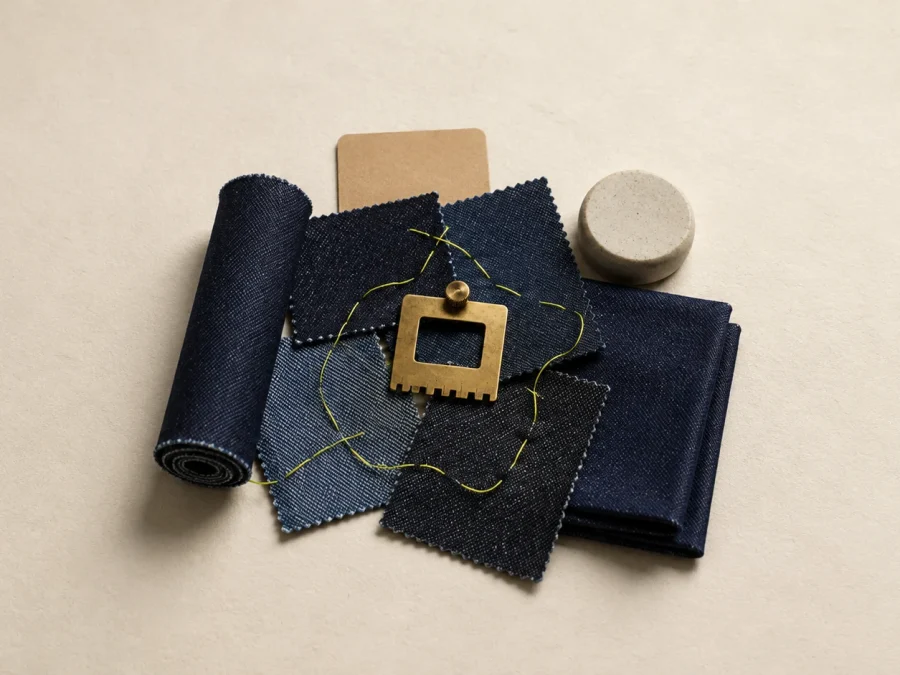
Cone Denim says it will exit denim manufacturing in China by year-end 2026 and focus its manufacturing platform in Mexico. For fashion buyers, the useful response is a fabric-by-fabric transition record—not an assumption that a country change preserves the same cloth, origin treatment, price, or delivery.
Administrators estimate that unsecured creditors of the former Harvey Nichols trading company are owed £270.5 million and may recover up to 15 percent. For fashion suppliers, the filing turns a familiar lesson into an operating requirement: an accepted order is not collected cash.
A new sector estimate puts 2024 apparel emissions at 1.004 gigatonnes even as individual companies report progress. The useful reading is not that factory projects failed; it is that brands need to reconcile material volume with carbon intensity on the same operating bridge.

France now links an apparel producer’s environmental contribution to the breadth of its range and the economics of repair. The practical consequence is a new kind of product record: catalog size, price, category, and repair evidence must agree.