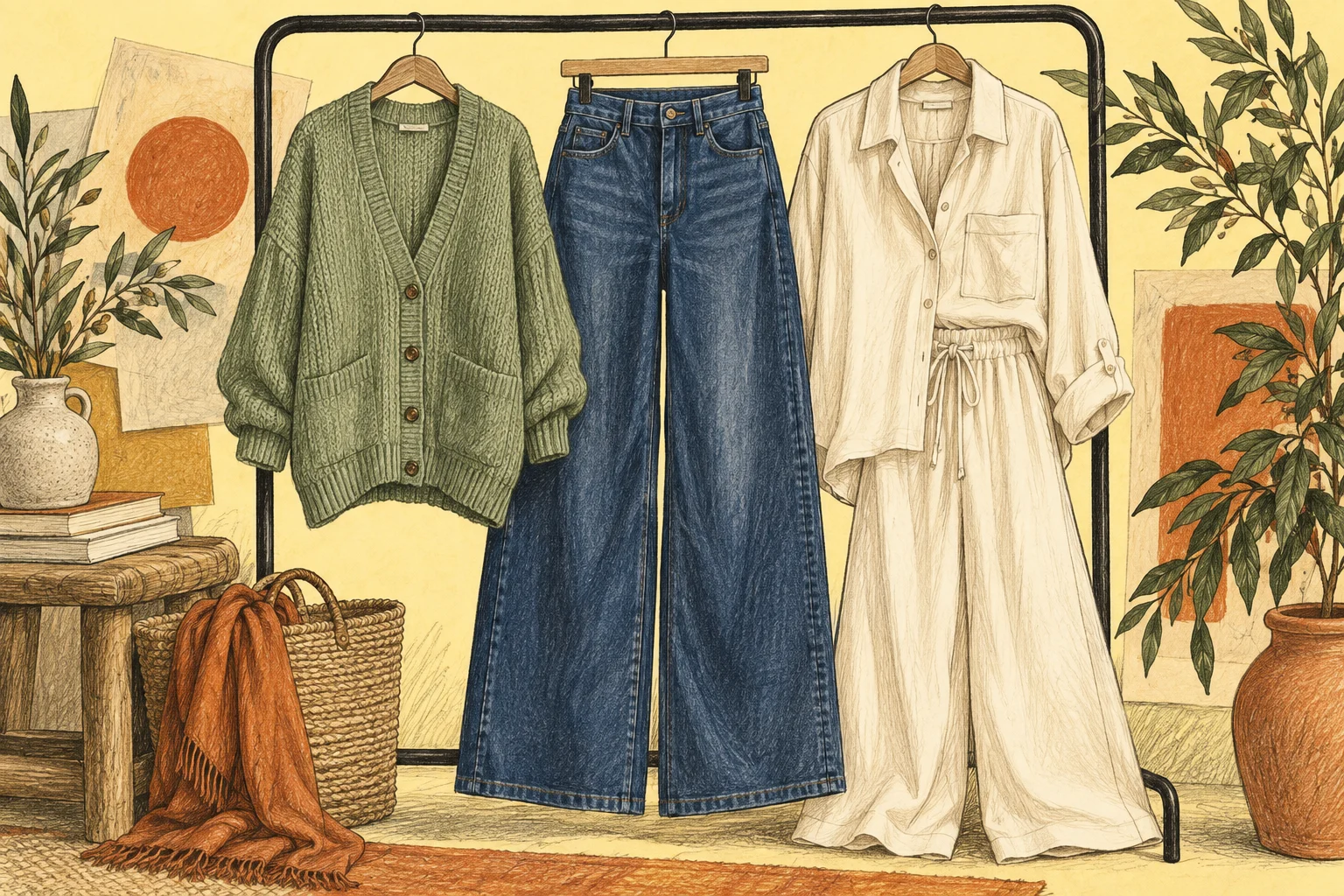
A buyer arriving in Los Angeles with a shopping list still has a harder question to answer: which pieces will earn their space back home? A rail full of coordinated outfits can make a convincing showroom presentation. It cannot tell a boutique whether its customers need another set, a different inseam or a lighter layer.
The available evidence gives that buyer a useful starting point, with important limits. Circana has reported growth in U.S. jeans sales. FASHIONGO has described the trends attracting buyers during its fall/winter event and differences between regional assortments. Together, these suggest categories to investigate through LA sourcing channels, rather than a list of products proven to sell across the Fashion District.
This guide is published September 24, 2026. Its demand reports were published in May and July, and some underlying sales data end in May. They are historical signals to test against current orders and store results, not a live September sales feed. FashionMember has no district-wide transaction dataset and has not independently audited the platform rankings.
Relaxed sets: examine the second life of each piece
In its July 22 FW26 event recap, FASHIONGO ranked its comfort-focused Lounge direction first by buyer demand. It described relaxed shapes, soft knits and matching sets. That is the platform’s account of its own buying event, not a measurement of what U.S. consumers subsequently bought.
For an independent retailer, the interesting question is how many ways a set can work after its first coordinated outing. Can the top sit comfortably over denim? Does the trouser look intentional with a shirt already in the store? If the pieces depend entirely on each other, the assortment has less room to accommodate a customer who likes only half the proposition.
Before committing, request the actual sample and establish whether components are sold together or separately. A shopper may need different top and bottom sizes; a supplier’s pack structure may not permit that combination. Check opacity, waistband recovery and care instructions rather than inferring them from a styled photograph. These are proposed buying checks, not tests FashionMember has performed.
Our assessment: relaxed sets merit a place on the appointment brief where customers already buy casual separates. Start with a clear use case and a restrained color choice. A platform trend should not become a reason to duplicate a slow-moving set in several more shades.
Wide-leg denim: the clearest consumer-sales signal, with a fit caveat
Circana’s July 16 back-to-school release reported that jeans sales were up 7% that year through May and identified wide-leg silhouettes as resonating with consumers. This is broader U.S. evidence. It neither identifies LA-sourced merchandise nor establishes a winning supplier, wash, price or women’s size range.
Denim therefore deserves a different kind of appointment from a purely visual trend category. Ask to compare the same labeled size across the styles under consideration. Record rise, inseam, waist measurement and fabric composition. A wide leg can describe very different proportions, and two products can share the label while serving different customers.
A retailer with an established denim customer should compare the candidate against a known successful fit, not merely against another new arrival. Consider how the hem works with shoes the customer actually wears. If alteration is usually required, that is part of the purchase decision even when it never appears in the wholesale price.
Wide-leg denim belongs on the shortlist; a claim that every expansive silhouette will perform does not. The cited release also offers no basis for declaring barrel jeans the district’s leading item. Test the specific fit before extrapolating from the category.
Soft tailoring: buy the outfit’s function, not its label
FASHIONGO placed its Sculpted Soft Power direction second in the same FW26 recap, pairing defined shapes with fluid materials and pointing to blazers, trousers and refined sets. The recap is commercial platform content; it provides no transaction totals with which to reconstruct the ranking.
The practical opportunity is an outfit that looks composed without demanding the formality of a full suit. Our buying interpretation is to examine a small group of pieces around an occasion your customer can name: a workday, a meeting, an evening meal. “Elevated” is too vague to decide an order.
Look at how a jacket hangs open and closed, whether pockets pull and whether the trouser waistband remains comfortable when seated. Ask for the composition and care label of the supplied product, not just a fabric description in the listing. Fluid drape alone does not establish durability, breathability or easy care.
For a small assortment, a jacket that connects with existing trousers may be more useful than another complete outfit requiring its own accessories and styling story. That is an inventory judgment, not a prediction that separates will outsell suits nationally.
Cardigans and light layers: the destination determines the weight
FASHIONGO’s May 20 regional report highlighted layering categories in the Midwest, including sweaters, lightweight outerwear and transitional denim. It also associated the Northeast with coordinated sets and light knits. These observations are several months old and should not be presented as September regional sell-through.
They nevertheless raise a worthwhile planning question: is the buyer selecting for the climate outside the LA showroom or the climate outside the customer’s door? A cardigan’s relevance depends on its weight, delivery date and the role it fills. The same style may function as an outdoor layer in one destination and an indoor extra in another.
Ask suppliers to distinguish immediate stock from a future delivery. Compare the arrival window with your own selling calendar. A lighter garment arriving promptly may have a different purpose from a heavier one delivered after the intended floor change.
Avoid treating every knit as interchangeable replenishment. Check sleeve width over a shirt, fastening quality and whether the care requirements suit the customer. Those details give a cardigan a reason to be chosen beyond a seasonal color.
Regional dresses and graphic tees: a conditional fifth category
The May regional report also associated Southern buying with maxi dresses, graphic tees, sets and Western influences, while describing lighter casual dressing on the West Coast. This supports a regional question, not a universal instruction to buy more of every item named.
A boutique with a demonstrated audience for expressive casual dressing can investigate these categories as small tests. Another store may have little reason to participate. Existing customer behavior should decide which route deserves attention; sourcing in California does not make a garment inherently suited to a California customer.
For graphic merchandise, request clarity about artwork ownership and permission. For dresses, establish the intended wearing occasion and check lining, coverage and length. Do not assume a listing photograph resolves any of those questions. The proposed checks are more useful than treating “Western” or “maxi” as a complete product specification.
LA is a sourcing location, not an origin certificate
The LA Fashion District’s official wholesale resource describes its role as a wholesale hub. That makes it a place to explore sourcing relationships; it does not establish local manufacture, current inventory or a particular vendor’s reliability.
Confirm country of origin for each product and obtain the supplier’s actual order terms. A Los Angeles address and a Made in Los Angeles claim answer different questions. FashionMember is not identifying verified suppliers in this article, and the illustration is not evidence of merchandise available from a particular business.
Turn the shortlist into a brief before shopping: the customer, intended retail positioning, required delivery, acceptable size pack and the gap in the present assortment. Leave space to reject an appealing item when it does not fit that brief.
After a limited introduction, record full-price sales alongside returns, missing sizes and stock availability. A style that sells out in one size while leaving the rest behind needs a different response from balanced repeat demand. Reorder only when the evidence and supplier availability support it. The strongest buying decision may be a smaller commitment to a better-understood product.
Sources and verification
- FASHIONGO FW26 recap, July 22, 2026: primary platform account of event trends; not an independently audited retail ranking.
- Circana back-to-school report, July 16, 2026: U.S. consumer-market context, including jeans sales through May.
- FASHIONGO regional buying report, May 20, 2026: earlier regional assortment signals, not current district sales.
- LA Fashion District wholesale resource: official sourcing-hub context, not a product ranking or manufacturing-origin verification.
All four pages were checked September 24, 2026. They represent three organizations, with two reports from the same commercial platform. Buying recommendations are FashionMember’s analysis; no sales forecast or supplier performance guarantee is offered.
How this story was checked
- Sources
- 4 linked records · View list
- Last verified
- Reporting desk
- FashionMember Materials Desk
- Format
- Guide
- AI assistance
- Used with editorial review; disclosed above.