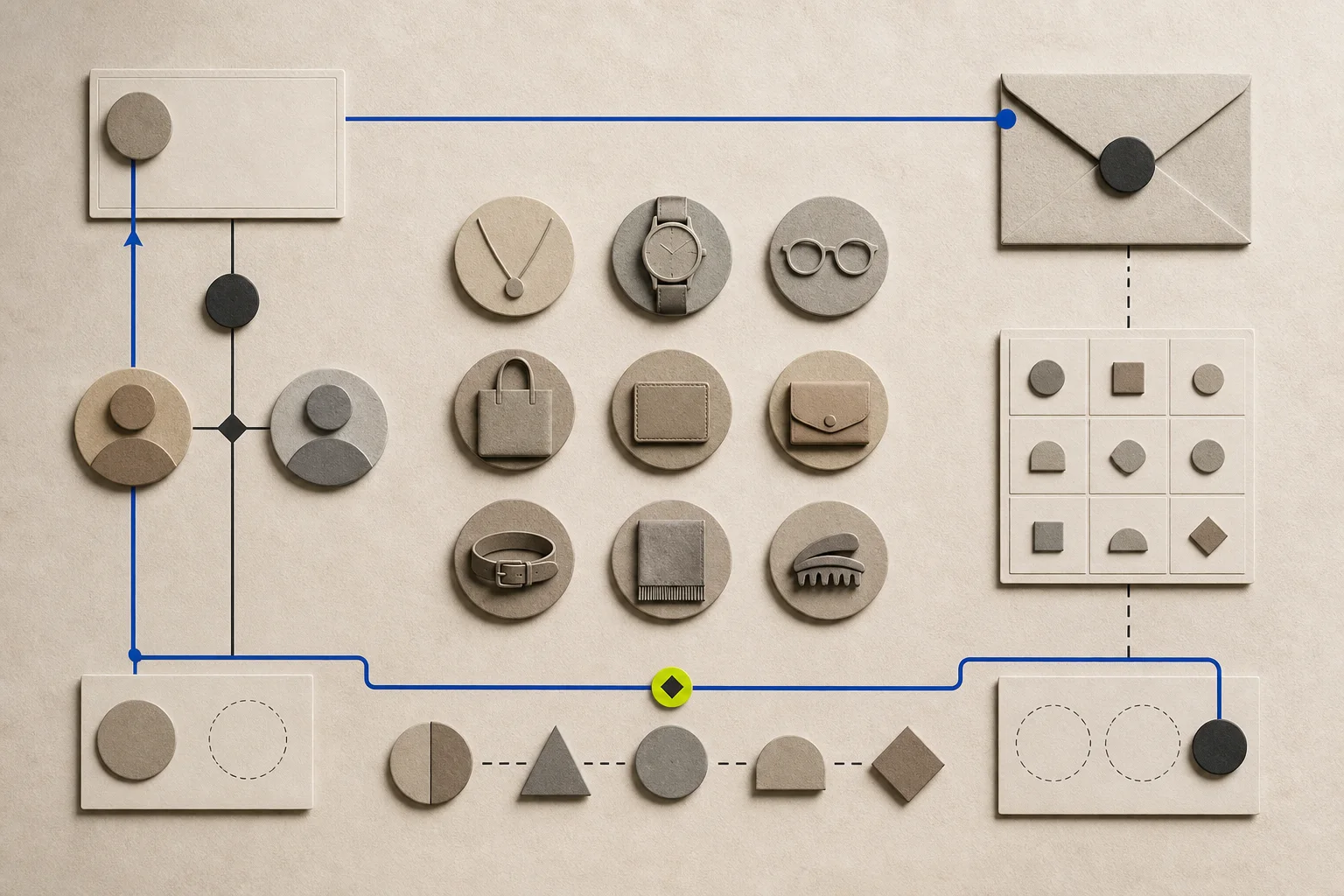
An accessory purchase can mark a milestone, provide a daily upgrade, test a new material or designer, replace a worn object, express identity, solve a practical need, or simply create pleasure. Any of those may be described by the purchaser as a gift to self. The motive cannot be read reliably from the product, customer profile, shipping address, season, gift wrap, or the fact that purchaser and recipient are the same.
FashionMember reviewed current official retail and consumer-spending context, a trade-association holiday survey, and official jewelry, advertising, product-data, and image guidance. It has not collected consented purchase-motive responses, locked an authorized retailer sample, inspected products, or reconciled completed returns and repeat purchases. The headline remains a question to test, not a finding.
Define self-gifting without surveillance
The primary classification should come from an optional, consented question asked after the transaction or in a separate study. A neutral version might ask who the purchase is primarily for, followed by optional reasons with “prefer not to answer” and open-text choices. Explain why the information is collected, how long it will be kept, and whether it affects service.
Do not infer motive from gender, age, relationship status, name, payment method, address, holiday timing, browsing history, or product category. A customer may ship a gift to themselves before giving it away. Another may buy a replacement watch during a holiday promotion. A third may select gift wrap for personal storage. These are not errors to solve with more profiling; they show why direct, minimal research is necessary.
Separate purchaser, intended recipient, and respondent in the data model. Use pseudonymous research IDs, restrict access, publish aggregated results, define minimum group sizes, and delete raw fields on schedule. Customer-service notes and payment data should not become a motive dataset.
Freeze the accessory taxonomy
Before asking which categories are growing, define them. A workable starting taxonomy might include jewelry; watches; eyewear; bags; small leather goods; belts; scarves and wraps; hair accessories; hats; gloves; and other small objects. State whether footwear, beauty, electronics, and wearable technology are excluded or reported separately.
Each category needs exact product and variant identity, material, size or dimensions, color, current price, availability, promotion, return terms, and access date. Jewelry also requires a finer taxonomy for metal type and fineness, natural or laboratory-grown stones, treatments, plating, pearls, and other material claims. A broad “accessories” total can hide very different price, replenishment, seasonality, and disclosure risks.
Google Merchant Center’s product specification supports consistent product IDs, variants, prices, availability, and landing pages. It does not reveal purchase motive or confirm material claims. The FTC Jewelry Guides and gemstone consumer guidance explain why sellers must accurately describe precious metals, stones, treatments, and other characteristics. Product-specific review remains essential.
Growth needs comparable denominators
To claim category growth, compare matched periods using the same eligible retailers, category definitions, currencies, regions, return windows, and transaction states. Report units, net revenue where authorized, average selling price, customer count, category share, completed return rate, and repeat purchase separately. Separate promotion-driven timing from sustained change.
For self-gifting specifically, the numerator is consented purchases classified by the respondent—not all purchaser-equals-recipient transactions. The denominator is eligible purchases offered the same survey under the same method. Publish response rate and nonresponse. If the survey changes, the series may break.
The Census Bureau’s Monthly Retail Trade and BEA consumer-spending data provide broad economic context. They do not identify self-gifting motives or the exact accessory taxonomy used by a retailer. BEA’s state methods include categories such as jewelry and watches or luggage in allocation work, but that does not turn macro spending into product-level motive evidence.
NRF’s 2025 holiday survey reports planned spending and gift preferences with a stated sample and margin of error. It is useful seasonal context from a trade association. It should not be reframed as measured self-gift accessory growth, and planned spending is not completed purchasing.
Ask what job the object performs
Consented interviews can explore why a customer chose the category, what alternatives were considered, whether the purchase marked an occasion, how material and care information affected confidence, and what would make the item feel worth keeping. Avoid celebratory wording that pressures participants to call the purchase a reward.
Time the research carefully. An immediate post-purchase answer measures intention or emotion at checkout. A later interview can address use, satisfaction, service, and whether the product was kept. These are different outcomes. Link them only with explicit consent.
Accessibility belongs in category analysis. Closure force, chain and clasp size, bag weight, strap adjustment, tactile identification, eyewear fit, watch interfaces, sensory response, care, and repair can affect use. Recruit relevant participants rather than predicting needs from demographic data.
Completed returns and repeat purchase add context
Separate ordered, paid where authorized, shipped, delivered, returned, exchanged, kept, repaired, and repurchased events. Do not call an open transaction a kept self-gift. Wait for the declared return window and account for gifts purchased early.
Return reasons can identify product-expectation gaps in scale, material, color, weight, closure, fit, packaging, care, or claim clarity. They do not invalidate the original motive. Repeat purchase may indicate satisfaction, collection behavior, replacement, gifting to another person, or promotion. Ask rather than infer.
Retailer interviews should include buyers, store teams, ecommerce operators, and customer service. Request exact definitions and documentary support for any claim that customers are “treating themselves more.” Anecdotes can generate questions, not market percentages.
A reproducible fictional self-gift audit
FashionMember created four invented evidence packets in content/data/FM-111-self-gifting-accessory-audit.csv. The script scripts/fm111-self-gifting-accessory-audit.php checks whether a fictional packet documents current market context, an accessory taxonomy, a self-gift definition, a consented purchase survey, purchaser and recipient separation, privacy minimization, an authorized retail sample, product identity, price and inventory, material claims, occasion timing, customer interviews, completed returns, repeat purchase, category denominators, claims review, a human editor, ownership, and complete purchase arithmetic.
Two complete fictional packets reach self-gift-review; two remain on hold. Every customer, motive, product, category, retailer, purchase, return, repeat purchase, owner, and result is fictional. The audit tests packet completeness only.
Keep the motive with the person who owns it
Self-gifting can be a useful lens because it asks what value an accessory provides beyond a conventional gift calendar. It becomes harmful when a retailer converts that curiosity into unconsented profiling or treats a convenient proxy as truth.
The final FashionMember article should combine a stable category taxonomy, consented motive research, privacy controls, exact product evidence, mature returns, repeat purchase, retailer interviews, and transparent denominators. Until those gates are complete, it can publish the method and public context—but not identify a verified winning category.
Sources and verification
- U.S. Census Bureau: Monthly Retail Trade — official broad retail estimates and revision context; not product-level self-gifting evidence.
- U.S. Bureau of Economic Analysis: Consumer Spending — official personal-consumption context; not purchase-motive data.
- BEA: Personal Consumption Expenditures by State Concepts and Methods — official allocation methodology with broad jewelry, watches, and luggage category context.
- National Retail Federation: 2025 Holiday Consumer Survey — trade-association planned-spending context with stated methodology; not completed self-gift growth.
- FTC: Jewelry Guides — official guidance hub for jewelry marketing and disclosure issues.
- FTC: Jewelry, Precious Metals, and Pewter Industries Guides — authoritative industry-guide text and rule context.
- FTC Consumer Advice: Buying Gemstones, Diamonds, and Pearls — official material and treatment disclosure context for shoppers.
- Google Merchant Center: Product Data Specification — official product, variant, price, availability, and landing-page consistency guidance.
- FTC: Advertising FAQs for Small Business — authoritative claim-substantiation guidance.
- W3C WAI: Images Tutorial — authoritative image-purpose and alternative-text guidance.
How this story was checked
- Sources
- 10 linked records · View list
- Last verified
- Reporting desk
- FashionMember Editorial Desk
- Format
- Analysis
- AI assistance
- Used with editorial review; disclosed above.