The phrase “creative uniform” often produces a familiar picture: neutral layers, one practical jacket, generous trousers, comfortable shoes, and a bag that carries a day’s tools. The picture can be stylish and still be too simple. A graphic designer at a screen, a fashion designer moving between CAD and fittings, a photographer on location, a set builder installing work, and an art director presenting to a client face different tasks, environments, dress expectations, and hazards.
FashionMember reviewed current official occupation, work-requirement, protective-equipment, care, product-data, advertising, and image guidance. It has not entered workplaces, interviewed workers, inspected garments, or studied returns. This draft replaces the singular uniform with a task-based observation protocol.
Define creative work by task and context
The Bureau of Labor Statistics describes arts and design occupations as work that creates products and concepts with practical or aesthetic purposes. Its current Fashion Designers profile lists research, sketching, computer-aided design, material selection, prototype work, presentations, trade shows, production oversight, travel, and deadline pressure. That range alone makes one outfit an unlikely answer.
The sample should predefine occupations and employment relationships, including employees, self-employed workers, freelancers, owners, assistants, production workers, and students only where ethically appropriate. Record the specific context: screen day, studio making, fitting, sourcing trip, warehouse or sample room, location shoot, installation, travel, client presentation, event, or commute.
Do not infer someone’s occupation from appearance. Participation and quotes require consent, and a worker must be able to decline without employer pressure.
Observe requirements, not personal capacities
BLS’s Occupational Requirements Survey defines physical demands around critical job tasks rather than the capabilities of an individual worker. Its current materials distinguish sitting, standing, lifting, carrying, reaching, low postures, gross manipulation, fine manipulation, keyboarding, and environmental conditions.
That is the right level for clothing research. Instead of calling a trouser “creative” or “functional,” ask whether it allows the declared reaching, kneeling, sitting, climbing, carrying, or fine-tool task. Record temperature, indoor and outdoor transitions, dust or wet processes, public-facing time, commute mode, equipment, and available storage.
The study should not turn occupational averages into a dress recommendation. A broad BLS occupation can contain many work settings, and the survey is not a wardrobe dataset. Direct observation and interviews must explain the local context.
Build the garment system around jobs to be done
For each exact product and variant, record dimensions, material and lining, stretch, closures, pocket count and access, tool compatibility, adjustable elements, hem and sleeve management, weight, care, current price and inventory, and authorized physical observations.
A modular system may include a base layer for climate changes, an overshirt or jacket with task-specific storage, trousers that support seated and low-posture work, and footwear suited to the surface. Those are hypotheses to test. More pockets can add weight and snag points. Oversized clothing can support movement in one setting and create a hazard near machinery in another.
Google Merchant Center’s current product-data specification helps preserve exact variants, materials, size, price, and availability. It does not establish movement, comfort, durability, safety, or professional appropriateness.
Uniform must not erase identity or access
A useful work wardrobe can reduce decision burden while leaving room for identity, culture, gender expression, religious practice, disability, sensory needs, and changing bodies. “Neutral” should not become an expectation that workers suppress visible difference.
Recruit consented participants across the actual size range and relevant mobility, seated, dexterity, vision, hearing, sensory, temperature-regulation, and dressing-assistance contexts. Test closure reach and force, tactile identification, waistband pressure, pocket access, seam irritation, garment noise, layering, and care. Pay contributors where appropriate and minimize personal information.
Dress-code research must distinguish a worker’s preference, client expectation, employer rule, and legal or safety requirement. Qualified employment and disability review is needed for policies or accommodation questions. The article should not advise an employer how to regulate dress based on a fashion observation.
Keep PPE outside the trend claim
OSHA explains that personal protective equipment responds to workplace hazards and may include protective clothing, safety footwear, eye, face, hand, head, respiratory, and fall protection. An employer’s hazard assessment and applicable standards determine what is required.
A fashionable boot that looks substantial is not safety footwear. A studio coat is not chemical protection. A reflective-looking trim is not visibility certification. Record PPE separately and do not style, alter, or replace required equipment without qualified approval. Hybrid or everyday garments can be discussed only for the tasks where they are appropriate.
This distinction also protects product claims. FTC advertising guidance requires objective claims to have a reasonable basis before dissemination. Words such as ergonomic, anti-fatigue, protective, cooling, supportive, or all-day comfortable need exact scope and evidence.
Fieldwork must protect workers
Obtain permission from both the workplace and each participant, but do not let an employer select only favorable workers or see confidential responses. Avoid recording production secrets, customer data, screens, access badges, addresses, or safety-sensitive layouts. No covert observation or employee surveillance belongs in this study.
Use a frozen schedule of sites, roles, tasks, and time windows. Two observers can code garment features, while workers explain why an item is used. A repeated item may reflect a dress rule, affordability, laundry cycle, climate, personal preference, or limited choice. Ask before interpreting.
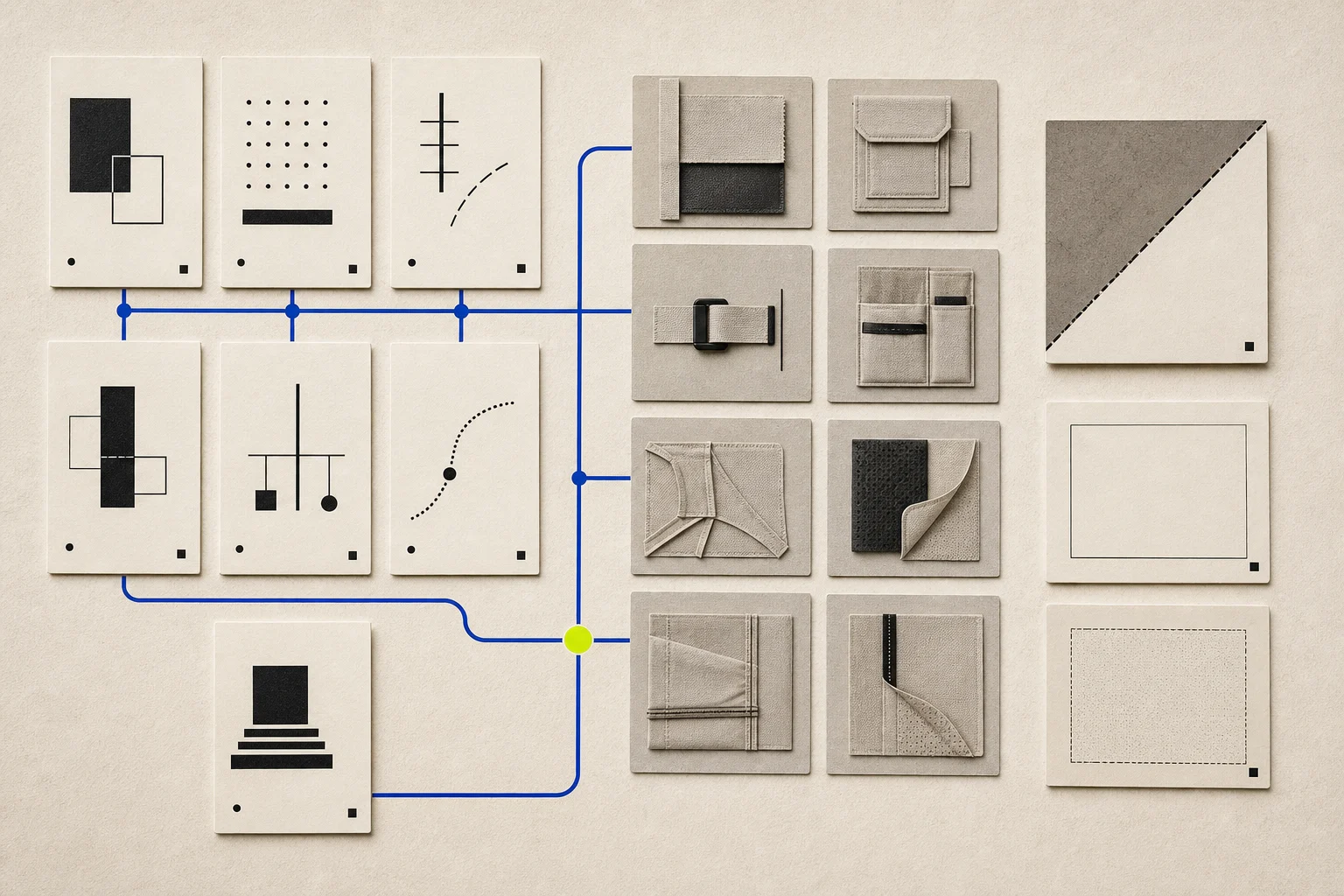
Original photography needs releases and a rights log. Generated editorial art should contain no invented worker or workplace and must be labeled non-documentary. W3C image guidance supports appropriate alternative text after the final image and context are known.
Retail evidence tests utility over time
An authorized retailer or brand study should connect exact variants to size availability, purchased and received units, completed returns, repair or warranty requests, and repeat purchasing. Interview workers after relevant use intervals, not only at checkout.
Return reasons should distinguish fit, closure, pocket function, material, heat, movement, care, damage, and mismatch between product language and work context. Report eligible-sales denominators and mature windows. Do not treat low returns as comfort proof.
A reproducible fictional workwear audit
FashionMember created four invented evidence packets in content/data/FM-113-creative-work-uniform-audit.json. The script scripts/fm113-creative-work-uniform-audit.php checks whether a fictional packet documents current occupation sources, a creative-work definition, an observation protocol, consented workplace access, protection from employer surveillance, worker interviews, task context, garment identity, material and construction, movement and fit, tool carry, climate, size and accessibility, care and durability, PPE separation, price and inventory, completed returns, claims review, a human editor, ownership, and complete context arithmetic.
Two complete fictional packets reach workwear-review; two remain on hold. Every worker, employer, workplace, garment, observation, task, test, return, owner, and result is fictional. The audit does not establish a real uniform or recommendation.
The useful unit is a context, not a look
Creative work may be converging around adaptable layers and practical components, but that remains a hypothesis. The stronger article will show several task systems and the tradeoffs within each, including safety and accessibility.
Until FashionMember completes ethical observations, interviews, product inspection, fit and use testing, returns, and human review, it can publish the research framework. It cannot name one verified new uniform for creative workers.
Sources and verification
- U.S. Bureau of Labor Statistics: Fashion Designers — current official duties, work environments, travel, tools, and employment context.
- U.S. Bureau of Labor Statistics: Arts and Design Occupations — official occupation-group scope; not wardrobe evidence.
- BLS Occupational Requirements Survey: Occupational Profiles — current official physical, environmental, cognitive, education, and task requirement framework.
- BLS: Physical Demands — official task-focused definitions for sitting, standing, lifting, carrying, reaching, pushing, and pulling.
- BLS: Gross and Fine Manipulation — current official hand, finger, tool, mouse, and keyboarding requirement context.
- OSHA: Personal Protective Equipment Fact Sheet — authoritative hazard-assessment and PPE context; not fashion-product certification.
- Google Merchant Center: Product Data Specification — official current product, variant, size, material, price, and availability guidance.
- FTC: Advertising FAQs for Small Business — authoritative substantiation guidance for objective performance or comfort claims.
- FTC: Care Labeling Rule — authoritative care-instruction framework; not durability or suitability certification.
- W3C WAI: Images Tutorial — authoritative alternative-text and image-purpose guidance.
How this story was checked
- Sources
- 10 linked records · View list
- Last verified
- Reporting desk
- FashionMember Editorial Desk
- Format
- Analysis
- AI assistance
- Used with editorial review; disclosed above.