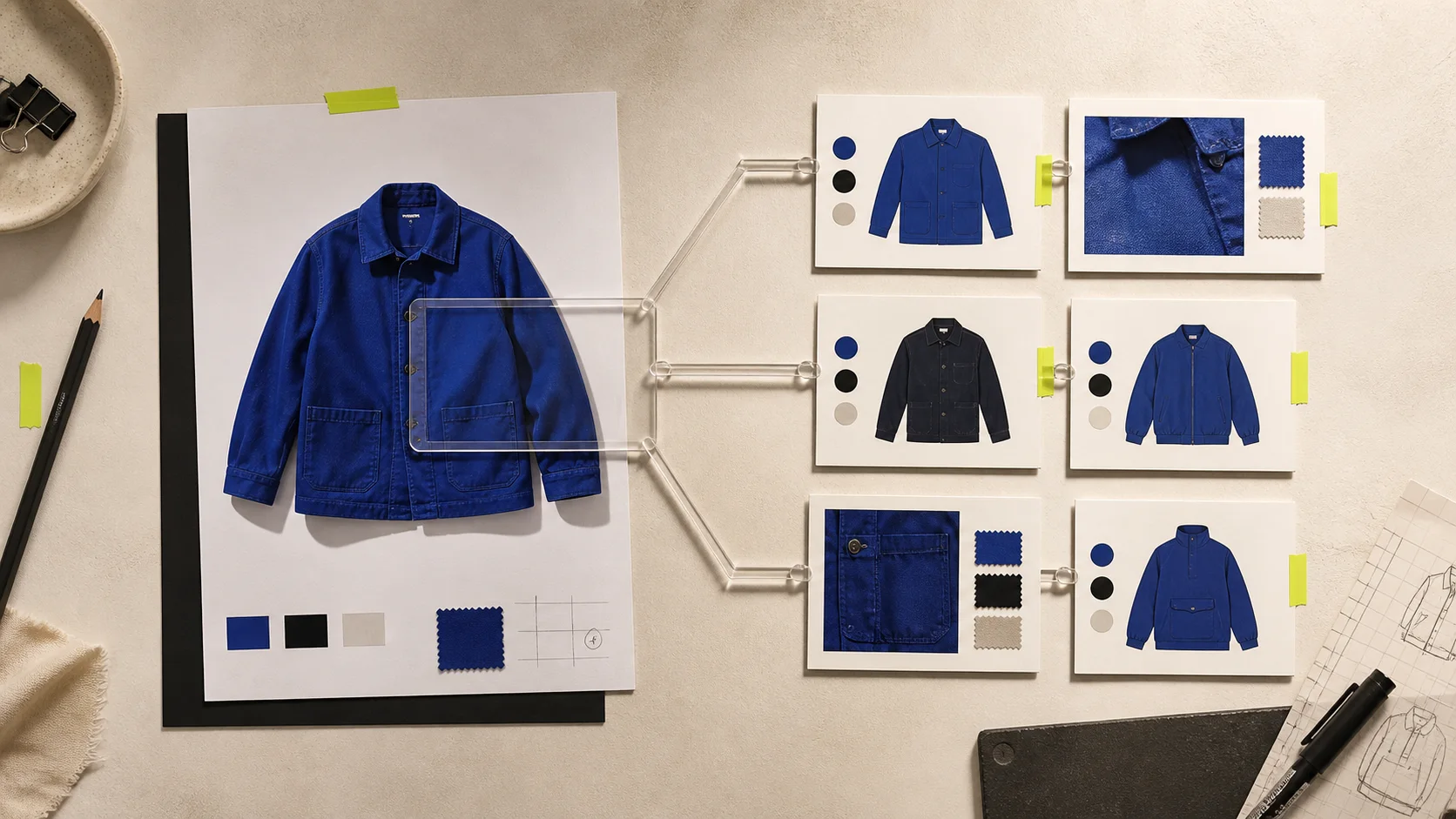
A fashion photograph used to have a mostly linear job: attract attention, show a product, and lead a shopper toward a product page or store. Visual discovery makes that path less linear. A person can begin with a cropped sleeve, a street-style image, a fabric detail, or a screenshot and move toward visually related items.
That does not make the image a new universal SKU. It makes the image one input in a larger retrieval system. The system still needs a crawlable page, accurate product facts, variant relationships, useful context, and inventory that agrees with what the shopper can see.
The useful operating idea is simple: every product image can function like a shelf entry. A shelf entry has to be recognizable, correctly labeled, placed in the right section, and connected to something a customer can actually buy or learn from.
A match is not an understanding
Visual systems can compare color, shape, texture, silhouette, and surrounding context. They can also be wrong in ways that matter to fashion. A cropped blue overshirt can resemble a chore jacket, denim jacket, or lightweight coat. A satin surface can be confused with silk. A detail image can hide length, closure, or proportion.
Brands should therefore separate three layers:
- Visible evidence: what a person can reasonably observe in the image.
- Declared product data: material, color, size, availability, price, identifiers, and variant relationships supplied by the seller.
- Editorial context: how the item fits, feels, was made, or compares, supported by reporting or verified product documentation.
Visual similarity belongs mostly to the first layer. It should not silently invent the other two.
What makes an image discoverable
Google’s image guidance says standard HTML image elements help crawlers find images, while CSS background images are not indexed in the same way. The same guidance recommends useful alt text, descriptive filenames, relevant nearby copy, and pages that perform well for users. None of those elements guarantees a result, but together they make the asset easier to discover and interpret.
For a fashion team, that means the technically impressive campaign image is not enough if it lives only inside a script-heavy gallery with generic filenames and no product context. A clean <img> element, responsive source set, stable URL, descriptive alt text, and relevant caption create a more legible publishing object.
Image quality and speed have to coexist. A sharp textile detail may help a shopper evaluate weave or finishing, but a needlessly heavy file can make the landing page slow. Store a high-quality master, export fit-for-purpose renditions, declare dimensions, and test the actual mobile page.
Product data is the second half of the shelf
Google’s Product structured-data documentation describes two broad product cases: editorial product snippets and merchant listings for pages where a customer can purchase. The visible page and the markup must agree. Structured data is not a hidden place to add claims that the page does not support.
For apparel, variants deserve special attention. Color and size are not decorative fields. If the blue jacket image opens a page whose selected variant is black, the experience is already broken even if the visual match was technically close. The Merchant Center product-data specification treats attributes such as color, gender, size, identifiers, and item groups as structured product information with detailed requirements.
The operating rule should be: the image, selected variant, visible page, structured data, and feed describe the same sellable object. When one layer changes, the team checks the others.
Build an image set, not one heroic image
A main product image has a different job from an editorial detail. The Merchant Center image-link guidance distinguishes the main image from additional images and sets rules around accurate display, file formats, resolution, overlays, and staging. Those rules apply to the platform’s commerce surfaces, not every image on a brand site, but they reveal a useful production distinction.
A practical fashion set can include:
- a clear front or three-quarter view tied to the exact variant;
- a back view;
- close details of fabric, closure, seams, hardware, or finish;
- a scale or fit view whose context is disclosed;
- alternate styling or environment images that do not replace the factual product view;
- accessible descriptions that explain relevant visible differences.
Do not use a synthetic lifestyle scene as proof of a physical product’s exact drape, texture, construction, or fit. If generative tools contribute to an editorial image, label the image and keep the real product documentation separate.
A preflight for every visual shelf entry
Before release, ask six questions.
Can it be found? The image uses a crawlable HTML element, a stable URL, a descriptive filename, declared dimensions, and a useful sitemap strategy where needed.
Can it be understood? Alt text and nearby copy describe the subject in context without keyword stuffing. The page title and heading tell the same basic story.
Does it match the product? Color, material, pattern, and variant selection agree across image, page, feed, and structured data.
Can a person act? The landing page has accurate availability, price, shipping, return, size, and contact information appropriate to the transaction.
Are rights and origins recorded? The team can identify the creator, license, allowed uses, source type, and any synthetic-media disclosure.
Can the team measure the outcome? Analytics distinguish image-led entrances where the platform provides that information, while conversion analysis includes returns, complaints, and variant errors—not clicks alone.
What not to promise
There is no honest way to guarantee that a particular image will appear for a particular visual query. Search systems, indexes, interfaces, and user context change. Google’s current guidance for generative search features explicitly emphasizes foundational SEO, valuable original content, and high-quality media rather than separate “AI search” tricks.
The same restraint belongs in visual discovery. Do not describe a metadata field as a ranking switch. Do not create hundreds of near-duplicate image pages for imagined queries. Do not make a synthetic image look like documentary product evidence. Do not count an aesthetically similar result as a commercially useful match until the shopper can verify the actual item.
The opportunity for independent fashion businesses
Large catalogs benefit from scale, but independent brands and Los Angeles showrooms can compete through specificity. Original textile details, construction notes, verified variant data, and informed local reporting are hard to replace with generic catalog copy. A smaller team can also correct mismatches faster because the people who handle the sample, photograph it, and manage the page are often close to one another.
The new shelf is not only visual. It is the connection between a visible object and reliable information. The image opens the door; product data and editorial credibility decide whether the shopper should walk through it.
What the shelf test leaves open
This article maps official publishing requirements and proposes an operational preflight. FashionMember did not measure visual-search ranking, recognition accuracy, traffic, or conversion for a live retailer. Platform interfaces and eligibility rules can change, so requirements must be rechecked at publication and implementation.
Sources and verification
- Google Search Central: Image SEO best practices — crawlability, image elements, page context, filenames, alt text, quality, and performance.
- Google Search Central: Product structured data — product snippets, merchant listings, and visible-page alignment.
- Google Merchant Center: Image link specification — current image requirements, formats, main-image guidance, and additional images.
- Google Merchant Center: Product data specification — apparel attributes, identifiers, variants, and product-data requirements.
- Google Search Central: Optimizing for generative AI features — foundational SEO, original content, media, and cautions against AI-search manipulation tactics.
How this story was checked
- Sources
- 5 linked records · View list
- Last verified
- Reporting desk
- FashionMember AI & Retail Desk
- Format
- Analysis
- AI assistance
- Used with editorial review; disclosed above.