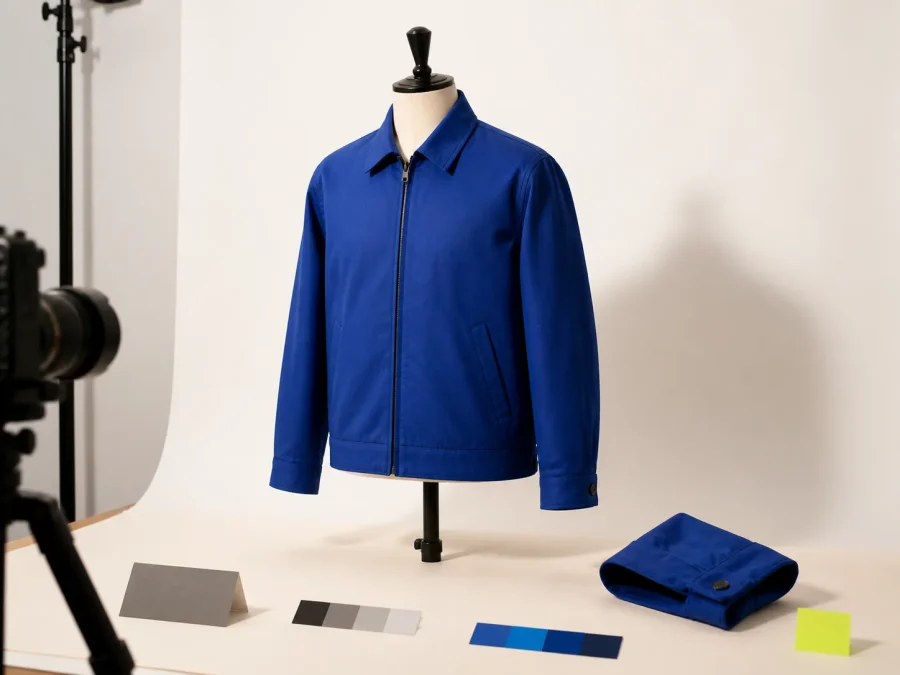
How to Photograph Products for Both People and AI Search
Build an image set that lets shoppers judge the real product, lets accessibility text explain its purpose, and gives commerce systems a clean, consistent link to the correct variant.
Start with what’s new. Find the reporting that helps with your next decision.
Build an image set that lets shoppers judge the real product, lets accessibility text explain its purpose, and gives commerce systems a clean, consistent link to the correct variant.
U.S. wholesale readiness begins with a responsible importer, product-specific classification and origin evidence, correct labels, safety and certificate scope, traceable manufacturing, and terms that survive the full logistics path.
A fashion sample should be reviewed as a versioned evidence packet—product identity, measurements, construction, materials, fit, labels, testing, defects, and disposition—not as a single yes-or-no impression.
The strongest appointment kit connects the exact sample in the room with current product data, commercial terms, delivery evidence, claims support, and a controlled follow-up process.
A useful showroom introduction proves relevance, makes product facts easy to verify, asks for one proportionate next step, and respects the recipient’s identity, time, inbox, and legal boundaries.
Recheck the date, register with each building, confirm the right showrooms, sequence the route, protect open-to-buy, and assign follow-up before the first appointment begins.
Define the buying mission, verify credentials and stops, plan by district zone, and preserve control over product evidence and orders—the first trip should be smaller and more deliberate than the map suggests.
Test-and-repeat, hybrid distribution, subscription access, branded resale, and IP licensing are active models, but each shifts risk rather than removing it.
On-demand production does not remove inventory, setup, quality, capacity, or customer-promise risk; it relocates those decisions into a faster operating system that must be measured end to end.
Onboarding is a versioned evidence process covering identity, ownership, facilities, capability, subcontracting, labor, safety, quality, traceability, trade, data access, incidents, contracts, and ongoing review—not a one-time score.
A purchase order cannot prove an entire supply chain, but it can create the identifiers, evidence requests, and change controls that make later tracing possible.
A tech pack becomes useful when every page describes the same approved product, carries a version, and connects construction, labels, testing, and changes to accountable decisions.