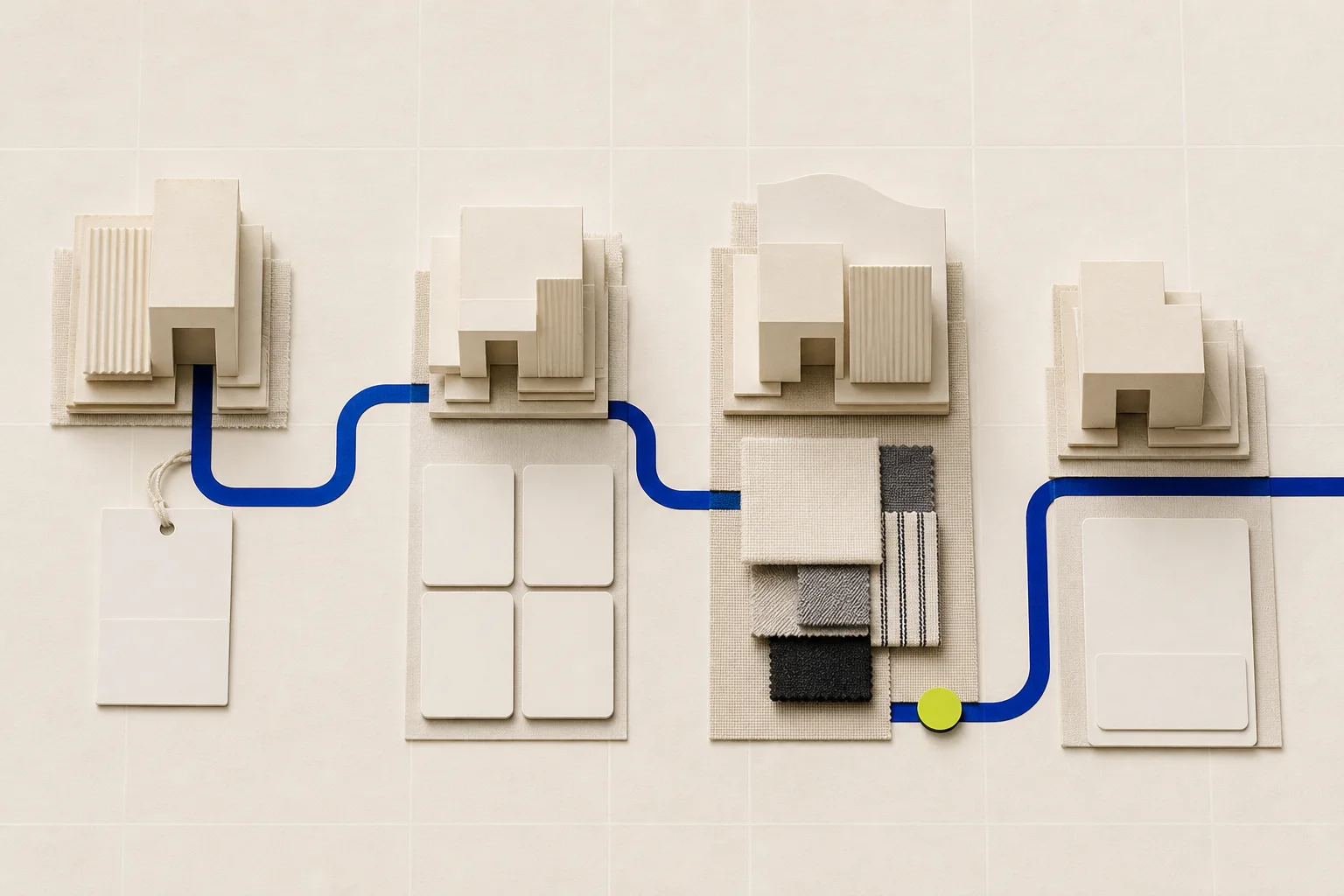
Los Angeles Market Week is not one registration, one lobby, or one universal schedule. The LA Fashion District’s current event page coordinates the larger idea, while participating showroom buildings publish their own registration and visit information. A productive plan therefore has two layers: current event-level orientation and building-by-building, showroom-by-showroom confirmation.
This guide was researched remotely on September 1, 2026. FashionMember did not register, attend, verify a showroom, test a route, inspect product, place an order, or photograph an event. Market dates, participants, registration, credentials, hours, appointments, programs, amenities, parking, access, and policies can change. Recheck the official event page and each building and showroom close to travel.
Freeze the trip around a verified date
Start with the current LA Fashion District Market Week page, then open the official pages for the buildings in scope. The district page says buyers register separately with each showroom building. California Market Center, Cooper Design Space, and The New Mart publish distinct first-party entry points. A confirmation from one is not proof of access to another.
Record the event name, target date, source URL, access date, last recheck, participating building, registration status, credential requirements, and contact. Avoid repeating an exact date in a permanent planning template. The operational record should be refreshed shortly before booking travel, again before the event, and whenever an organizer sends an update.
Separate facts into four states: published, registered, directly confirmed, and observed on site. A published schedule may change. A submitted registration may still require approval or arrival check-in. A building badge may not establish a showroom appointment.
Register and confirm credentials building by building
The district buyer guide says wholesale showrooms typically ask for a business license or seller’s permit, a business tax identification number, and related industry invoices. Individual buildings and events control their current process. Use the registration link reached from the official site, confirm the recipient, and provide only the data required.
Create a credential checklist for each building. Note preregistration status, approval evidence, arrival identification, badge pickup, guest rules, and any missing document. Do not treat a seller’s permit, resale certificate, business license, buyer badge, and tax ID as interchangeable. California’s tax authority explains the purpose and contents of a resale certificate for qualifying resale purchases; event access does not decide the tax basis of a purchase.
Protect sensitive records. Confirm how documents are transmitted and stored, whether fields can be redacted, and who can access them. Keep tax, identity, bank, and card data out of editorial notes.
Curate appointments against the assortment plan
Do not build a schedule from every brand that looks interesting. Begin with the season, customer, channels, categories, price architecture, size range, climate, inventory position, delivery calendar, and defined gaps. Use the buildings’ current directories to find candidates, then confirm each showroom directly.
Every appointment record should include:
- building, current showroom and suite, contact, time, and confirmation evidence;
- represented brand or category to verify and the relevant season;
- the assortment problem the meeting should solve;
- intended delivery window and current inventory context;
- price, size, minimum, pack, reorder, and terms questions;
- accessibility or communication needs discussed;
- who may select, negotiate, approve, and commit;
- source URL, access date, and next recheck.
Appointments should be few enough to review well. Group them by building and floor, add travel and elevator buffers, and protect time after dense line reviews for notes. A meeting that ends without identified styles, evidence, open questions, and an owner is not complete.
Put open-to-buy and cash boundaries in the brief
Before the first meeting, state the total open-to-buy available for the market, how it is allocated by category and delivery period, and which commitments are already consuming it. Then define whether the on-site team can recommend, reserve, write, approve, or sign.
The buying brief should show current inventory, planned receipts, sales and markdown assumptions, minimum presentation needs, return exposure, cash timing, and contingency. Use ranges for uncertain demand. A compelling showroom presentation does not expand the budget or authority by itself.
At the product level, record style and variant, sample status, wholesale price and currency, minimum, pack, size and color availability, material, care, origin, stated claims, inventory or preorder status, cutoff, delivery window, freight, cancellation, substitutions, returns, damage, and payment terms. Label each item observed, stated, written, received, pending, or contradicted.
Route buildings as a sequence of decisions
Use the LA Fashion District contemporary-showroom overview to understand the cluster, then plan only confirmed buildings. Map fixed appointment times first, group floors, estimate movement between buildings, and add a recovery buffer. A generated illustration is never the route; use current official location information and live travel conditions.
If driving, consult the district parking page as a discovery resource and verify the chosen location, entrance, hours, availability, and rates. If using transit, consult LA Metro’s current rider and schedule information for the travel date. Create a fallback and allow for event congestion.
Ask each building about the accessible path from the planned arrival point, elevator status, restrooms, seating, service animals, and communication accommodations. Ask showrooms about their suites. ADA.gov explains general public-accommodation responsibilities but does not validate an event route on a specific day.
Control images, data, and order records
Market Week creates pressure to collect quickly. Ask before photographing people, products, line sheets, price sheets, badges, directories, or interiors. Record the permission, intended use, credit, restrictions, and expiration. Access to a presentation is not a license to publish the material.
If the team uses an AI tool to summarize notes or extract product data, use only an approved system and rights-cleared information. Remove sensitive personal, credential, payment, and contract data. Compare the output with the original document and preserve the source version.
Do not let the editorial workflow cross the transaction boundary. Before committing, reconcile seller identity, style and variant, quantity, price, extensions, discounts, freight, delivery, cancellation, substitution, return and damage policy, payment terms, and document version. FashionMember does not create, read, modify, transmit, or settle production orders, invoices, or payments.
Schedule the work after Market Week
The follow-up calendar should exist before travel. At the end of each meeting, assign an owner and due date for samples, claim evidence, product data, images, pricing corrections, credit forms, delivery questions, and proposed orders. Capture participants and permissioned materials.
Within the same day, reconcile notes and flag contradictions. Within the team’s defined review window, compare candidates against assortment, inventory, open-to-buy, cash, capacity, compliance, and delivery. Close rejected options respectfully and record why. Do not measure productivity by the number of tote bags, contacts, or photographs collected.
A FashionMember field report about a specific Market Week would require attendance, organizer and building verification, direct showroom confirmation, permissioned original or licensed imagery, accessibility review, buyer interviews, a visible last-verified date, and clear disclosure of any hosted access or commercial relationship.
A reproducible fictional planning gate
FashionMember created four invented Market Week plans in content/data/FM-192-market-week-plan.csv. The deterministic script scripts/fm192-market-week-plan-audit.php checks for current event scope, a date recheck, separate building registrations, credentials, confirmed appointments, season and assortment brief, open-to-buy and cash boundary, building route, travel and accessibility plan, product and terms questions, order authority, image and data permission, source capture, post-market follow-up, an owner, and positive appointment counts.
MWP-01 and MWP-03 reach plan-review because all fictional target appointments are confirmed and every required control is present. MWP-02 is held because four of ten targets are confirmed and several critical controls remain open. MWP-04 is an empty control and is held.
Plan-review does not verify an event date, registration, access, appointment, travel condition, accessible route, product, term, order, invoice, payment, or publication permission. It means only that an invented packet is complete enough for a human buyer and current-date review.
Sources and verification
- LA Fashion District: LA Market Week — official district event overview; dates, participation, and instructions can change.
- LA Fashion District: Buyer Info — official district guidance on credentials, appointments, and separate building registration.
- LA Fashion District: Contemporary Showrooms — official district orientation to the multi-line showroom cluster.
- California Market Center: LA Market Week — current first-party building event and registration information; recheck near travel.
- Cooper Design Space Market Week registration — current first-party building registration entry point.
- The New Mart Market Week — current first-party trade-event and eligibility information; schedule details are dynamic.
- The New Mart registration — current first-party registration starting point.
- LA Fashion District parking — official district parking discovery source; verify exact conditions.
- LA Metro: Riding Metro — official regional rider information; check the travel date.
- LA Metro schedules — official current schedule entry point.
- CDTFA Publication 103: Sales for Resale — official California explanation of resale purchases and certificate use.
- ADA.gov: Businesses That Are Open to the Public — official federal accessibility overview; not event-specific verification.
How this story was checked
- Sources
- 12 linked records · View list
- Last verified
- Reporting desk
- FashionMember Field Guide Desk
- Format
- Explainer
- AI assistance
- Used with editorial review; disclosed above.