The New Mart describes itself as a twelve-story wholesale showroom building with 100 showrooms and more than 500 fashion brands at 127 East Ninth Street in downtown Los Angeles. For a buyer, those headline numbers describe possibility, not a workable itinerary. A useful day is built from a short list of relevant appointments, current registration instructions, and enough time to document product and terms accurately.
This guide was researched remotely on September 1, 2026. FashionMember did not enter The New Mart, register a buyer, test a building service or accessible route, confirm a showroom, inspect a product, place an order, or create documentary photography. Dates, hours, tenants, brands, suites, credentials, appointments, services, access, product, and commercial terms must be reconfirmed with the building and individual showroom.
Separate the building from the appointment
The official home page, visitor information, showroom directory, Market Week page, registration page, and building-services page describe different parts of the visit. None should be stretched beyond its function.
A building may be open while a showroom is unavailable. A directory listing may be current enough for discovery but not current enough to prove a representative, collection, inventory position, or appointment. An event-registration page may establish a check-in path while leaving individual meetings to the showrooms. Put each claim in the itinerary with its source and verification state.
The current Market Week page describes the event as trade-only and says participants must own or work for a licensed retail business. It also presents current registration guidance and schedule information. Because event pages are dynamic, recheck the exact dates, hours, location, eligibility, and arrival process close to the trip rather than copying them into a permanent guide.
Confirm eligibility and protect credential data
The LA Fashion District buyer guide says wholesale vendors and contemporary showroom buildings typically ask for a business license or seller’s permit, a business tax identification number, and related industry invoices. The New Mart’s current instructions control its own process, and individual showrooms may ask for additional information.
Use only an official current registration path. Before uploading or emailing a record, confirm who receives it, why it is needed, whether sensitive fields can be redacted, how it will be retained, and what alternative is available. Do not send tax or identity records to a contact copied from an old directory or social post.
California’s tax authority distinguishes a seller’s permit from a resale certificate and explains the legitimate use and required contents of a resale certificate. A trade badge does not make every purchase tax-exempt, and a resale certificate should not be used for property the buyer intends to consume. Keep buyer eligibility, event access, and the tax basis for a specific purchase as separate checks.
Build the route from confirmed meetings
Use The New Mart’s current showroom directory to identify candidates, then confirm them directly. A working record should include the current showroom name, suite and floor, contact, represented brand or category to verify, meeting time, season, delivery window, credentials, and any access needs. Save the source URL and access date.
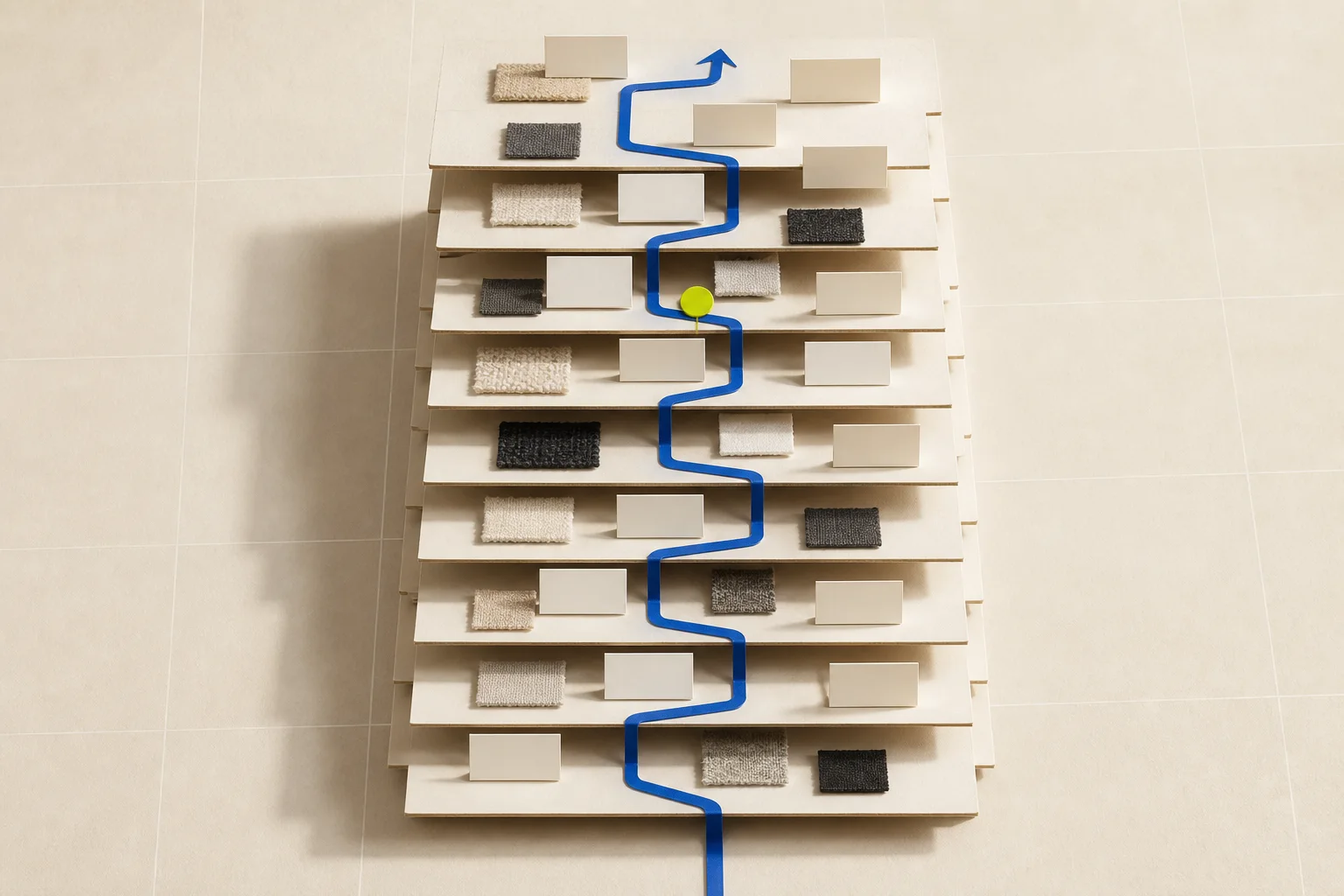
Once meetings are confirmed, order the day vertically. Group appointments by floor, plan realistic elevator and note-taking time, and add a buffer after any meeting likely to involve a broad line review. Do not set a target such as “visit every floor.” Set a target such as “resolve five defined assortment questions with complete evidence.”
The building-services page can help surface questions about Wi-Fi, freight, loading, parking, security, or other amenities, but a first-party description is not a guarantee that a service will be available for a particular visitor at a particular time. Confirm any service critical to the trip directly.
Prepare a buying brief for every showroom
Provide enough context for the representative to show a relevant line. The brief should name the retailer’s customer, sales channel, climate, category mix, price architecture, size needs, current inventory, delivery market, and gaps. Define the intended outcome before the meeting: compare three candidate styles, understand a reorder program, review construction, or establish whether a delivery window can work.
Ask a repeatable set of questions:
- exact style, color, size, pack, and variant identity;
- sample status and what may differ in production;
- wholesale price, currency, minimum, suggested retail context, and discounts;
- inventory, preorder status, cutoff, ship window, and backorder process;
- material, care, origin, performance, and sustainability claims with evidence;
- cancellation, substitution, return, damage, shortage, and claim procedures;
- payment terms, freight responsibility, and account approval;
- product data, photographs, usage rights, and sales or fulfillment contacts.
Label evidence as observed, stated, written, received, pending, or contradicted. A fast verbal explanation should not silently overwrite a written term. A directory category should not become a product claim.
Confirm arrival and accessibility
Use the current visitor and registration pages to identify the official arrival process, then confirm the details that matter: entrance, check-in desk, current hours, identification, elevator route, and event-specific instructions. If parking or transit is part of the plan, verify the selected option and create a fallback; listed locations, rates, and availability can change.
Ask the building directly about the accessible route from the chosen arrival point, accessible parking, elevator status, restrooms, seating, service animals, and communication accommodations. Ask the showroom about its suite and meeting format. ADA.gov provides the federal overview for businesses open to the public, but it does not certify The New Mart or a showroom’s conditions on the visit date.
Keep the accessibility contact, response time, and unresolved questions in the itinerary. If a route or accommodation has not been confirmed, say so.
Preserve control at the order boundary
The buyer should leave each appointment with a clear next step, not an ambiguous commitment. Reconcile seller identity, style and variant, quantity, unit price, extended amount, discount, freight, ship window, cancellation point, payment terms, return and damage policy, and document version. Flag anything the team must review after the meeting.
Separate assortment selection from authority to bind the business. Do not put card, bank, tax, or credential data into editorial notes. FashionMember’s content workflow does not create, read, edit, send, or settle orders, invoices, or payments.
Complete a same-day handoff: attendees, products reviewed, approved photographs or documents, unresolved claims, proposed terms, sample status, follow-up owner, and deadline. Reconcile any intended buy against current inventory, open-to-buy, cash timing, and delivery commitments outside the pace of the showroom.
A reproducible fictional visit gate
FashionMember created four invented visit packets in content/data/FM-088-new-mart-buyer-visit.csv. The deterministic script scripts/fm088-new-mart-buyer-visit-audit.php checks for current official pages, registration, credentials, appointments, building contact, accessibility and arrival plans, a floor route, buying briefs, terms and order controls, source capture, human on-site verification, an owner, and positive appointment counts.
NWM-01 and NWM-03 reach visit-review because every fictional target is confirmed and the required fields are present. NWM-02 is held because only two of eight targets are confirmed and critical controls remain open. NWM-04 is an empty control and is held. No name, schedule, route, appointment, service, or product in the fixture refers to a real business record.
The script checks invented packet completeness and arithmetic only. It does not verify The New Mart, a tenant, access, accessibility, service, merchandise, terms, orders, invoices, payments, or permission to enter or buy.
Sources and verification
- The New Mart — current first-party building overview, official address, and high-level showroom and brand counts, checked September 1, 2026.
- The New Mart showroom directory — current first-party discovery directory; individual listings and availability require direct confirmation.
- The New Mart Market Week — current first-party trade-event and eligibility information; exact dates and instructions are dynamic.
- The New Mart registration — current first-party registration starting point; it does not itself verify an individual appointment.
- The New Mart building services — current first-party service overview; availability and visitor applicability require confirmation.
- The New Mart visitor information — current first-party visitor orientation; recheck before travel.
- LA Fashion District: Buyer Info — official district guidance on commonly requested wholesale credentials and building registration.
- CDTFA Publication 103: Sales for Resale — official California resale-purchase and certificate guidance.
- ADA.gov: Businesses That Are Open to the Public — official federal accessibility overview; not verification of a specific building or showroom route.
How this story was checked
- Sources
- 9 linked records · View list
- Last verified
- Reporting desk
- FashionMember Editorial Desk
- Format
- Analysis
- AI assistance
- Used with editorial review; disclosed above.