Wholesale fashion no longer requires a buyer to cross a lobby, wait for a rack, or write every order in a room. A verified retailer can search millions of products online, compare vendors, use image search, watch live selling, access terms, consolidate shipping, and manage orders from one interface. Those gains are real.
Los Angeles showrooms also remain active. The California Market Center lists year-round showrooms, trade-only market events, buyer badges, and appointments. The New Mart describes a building with more than 100 showrooms and 500 brands and publishes 2026 market dates. The LA Fashion District identifies the California Market Center, Cooper Design Space, The Gerry Building, Lady Liberty Building, and The New Mart as contemporary showroom destinations.
The relevant question is not whether physical or digital wholesale wins. It is which buying uncertainties each format resolves, at what cost, and with what evidence.
Digital is already the operating baseline
FASHIONGO, founded in Los Angeles in 2002, currently presents an online B2B marketplace with retailer verification, millions of items, vendor access, image-based discovery, live video, order management, shipping programs, and payment terms. Its buyer registration requires business information and a seller’s permit or equivalent documentation for full access. Its vendor materials describe platform fees, payouts, integrations, and AI-assisted matching.
These capabilities make routine work faster. A buyer can discover products outside market dates, revisit orders, compare assortments, and communicate without travel. A seller can reach a wider network, synchronize inventory, and continue selling after a physical appointment.
The platform’s own “FG Live” language is revealing: live video is presented as the next best thing to seeing product and quality, meeting the brand, and asking questions in real time. Digital tools are increasingly good at carrying visual and transactional information. They also make the remaining value of a showroom more specific.
A showroom earns its place through decision quality
Physical access can matter when a buyer needs to evaluate attributes that product pages compress:
- fabric hand, weight, recovery, transparency, and drape;
- color relationships under consistent light;
- construction, seam finish, closures, trim, lining, and care;
- scale, proportion, fit block, and how multiple pieces style together;
- packaging, case packs, delivery windows, substitutions, and reorder feasibility;
- the sales representative’s knowledge of the line and the retailer’s customer.
Presence does not guarantee truth. Samples may differ from production. Showroom lighting can distort color. A representative can overstate delivery, exclusivity, or demand. A buyer can over-order in the energy of an event. Physical findings therefore need written product identity, terms, and follow-up.
Los Angeles showrooms operate as a network
The CMC’s current LA Market Week page describes a credentialed trade event connecting retail buyers and sales representatives, with individual showroom hours and appointments recommended. Its calendar also promotes weekly showroom visits between markets and notes that some spaces operate by appointment only. The New Mart publishes scheduled market periods and a large permanent showroom roster. Cooper Design Space describes its continuing connection to the garment industry and a community of fashion brands.
Together, these official materials show persistence and infrastructure. They do not prove buyer attendance, order volume, conversion, tenant performance, or the economic impact of any building. FashionMember has not yet conducted the required showroom and buyer interviews for this article.
The best workflow is hybrid and evidence-linked
A disciplined buyer can divide the work into three phases.
Before the appointment
Use digital tools to verify the brand and representative, review line sheets, identify missing information, compare current assortment, set category and cash limits, and book a focused appointment. Record the market date, showroom, authorized attendees, photography rules, and whether samples are production-equivalent.
In the room
Inspect only identified samples. Capture material, construction, fit, color, pack, minimum, wholesale price, suggested retail price, payment, cancellation, delivery, exclusivity, damage, and return terms. Ask what can change between sample and production. Do not photograph or publish people, products, documents, or private spaces without permission.
After the appointment
Match the written order to product identities, quantities, costs, dates, and terms. Separate an intention from a submitted order, an order from confirmation, confirmation from receipt, and receipt from saleable inventory. Follow completed returns, kept sales, and reorders before presenting the appointment as a commercial success.
Digital records make this chain more reliable. The showroom contributes physical and relational evidence; the platform and retailer systems preserve transaction and follow-up evidence.
Showrooms also concentrate context
A multi-brand sales representative can explain how a collection is structured, which products share deliveries, where size or material changes occurred, and how a buyer’s existing assortment overlaps. Neighboring buildings and market events allow comparison within a compressed period. Trend presentations and textile events can add upstream context.
This concentration can save attention, but it can also create selection bias. The visible buildings, brands, and invited buyers are not the entire Los Angeles market. A market-week story must declare which venues, floors, appointment types, categories, and dates were eligible and what could not be accessed.
Original photography is part of the verification gate
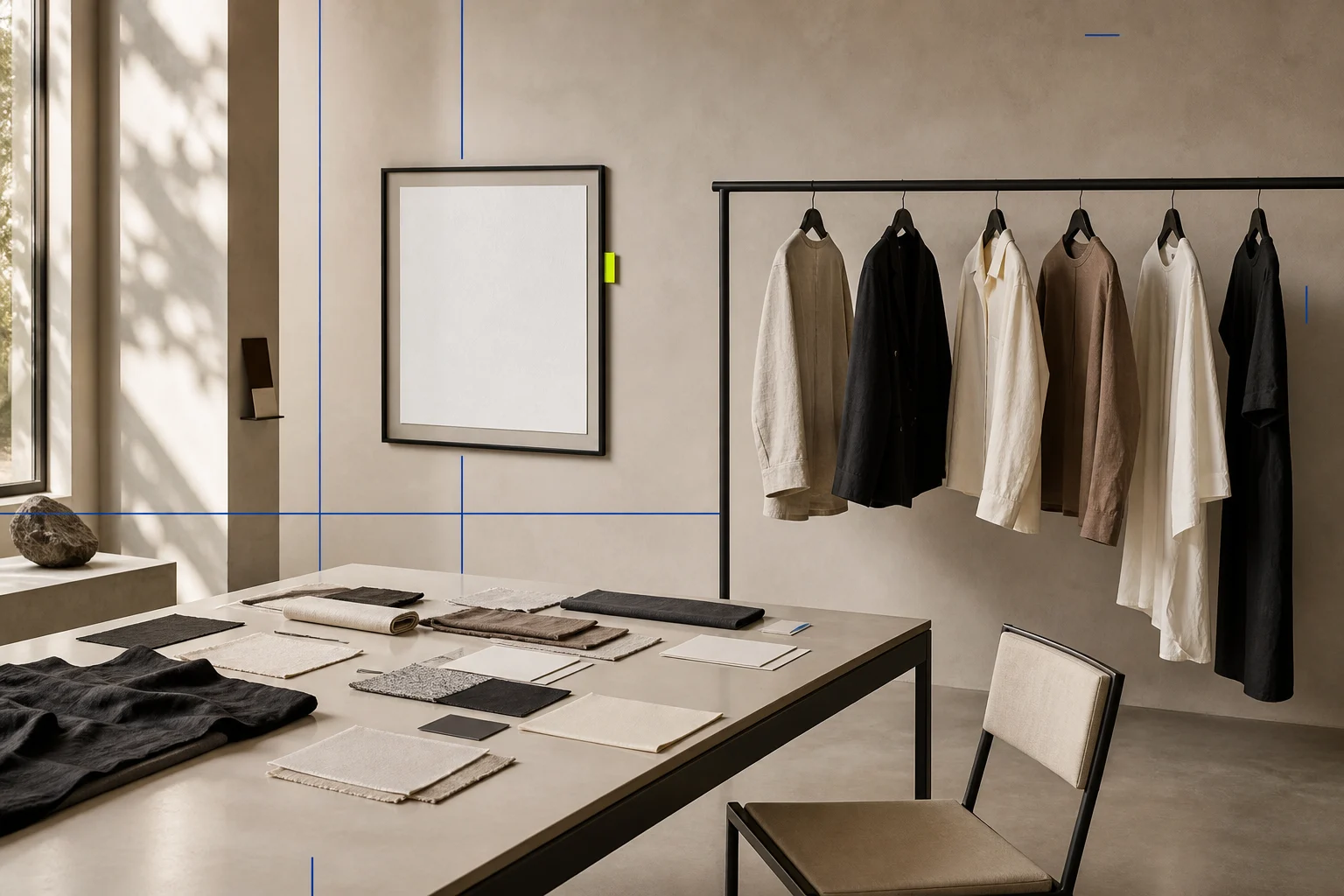
The current visual is a labeled editorial concept, not a documentary showroom photograph. A future reported showroom feature should use original or cleared photography with the required permissions from the property, showroom, brands, representatives, and identifiable people. Its image log should record capture date, location, photographer, releases, product permissions, edit history, caption, and restrictions.
Until that work occurs, the article uses a clearly labeled AI-generated non-documentary concept. It must never be captioned as the CMC, New Mart, Cooper Design Space, a real buyer appointment, or a documented Los Angeles business.
A reproducible fictional showroom audit
FashionMember created four invented visit packets in content/data/FM-140-showroom-value-audit.json. The script scripts/fm140-showroom-value-audit.php checks whether a fictional packet documents venue and appointment scope, trade credentials, interview consent, product identity, sample status, materials and construction, terms, order chain, receipts, completed returns, kept sales, reorders, digital comparison, photography rights, conflicts, source dates, and human review.
Two complete fictional packets reach field-review; two remain on hold. Every venue, showroom, brand, representative, buyer, product, quote, order, receipt, return, image, and outcome is fictional. Passing the audit does not prove that a real showroom visit created value.
The room matters when it changes a documented decision
A showroom should not survive on nostalgia. It should help a buyer reject a misleading sample, understand a line, discover a product that digital search missed, negotiate workable terms, or build a relationship that improves delivery and follow-up. Digital tools should handle the searchable, repeatable, and administrative work around that decision.
The strongest wholesale system is not purely physical or purely digital. It lets each channel do the work it can verify, then connects product observation to orders, receipts, completed returns, kept sales, and reorders. FashionMember will need direct interviews and authorized field reporting before it can say how often that happens in Los Angeles.
Sources and verification
- California Market Center — current first-party showroom, event, directory, tenant, and campus context.
- California Market Center: LA Market Week — current official 2026 trade-only event, buyer-badge, appointment, showroom, and date information.
- California Market Center: Calendar — current official year-round showroom and market-event context.
- The New Mart — current first-party showroom count, brand count, location, and 2026 LA Market Week dates.
- Cooper Design Space — current first-party building and fashion-community context.
- LA Fashion District: Contemporary Showrooms — official district organization’s building and market-week overview.
- FASHIONGO: Online Wholesale Marketplace — current first-party buyer tools, retailer verification, product discovery, live video, shipping, order, and terms context.
- FASHIONGO: Sell on FASHIONGO — current first-party vendor fees, payout, integrations, shipping, and AI-matching descriptions.
How this story was checked
- Sources
- 8 linked records · View list
- Last verified
- Reporting desk
- FashionMember Business Desk
- Format
- Analysis
- AI assistance
- Used with editorial review; disclosed above.